
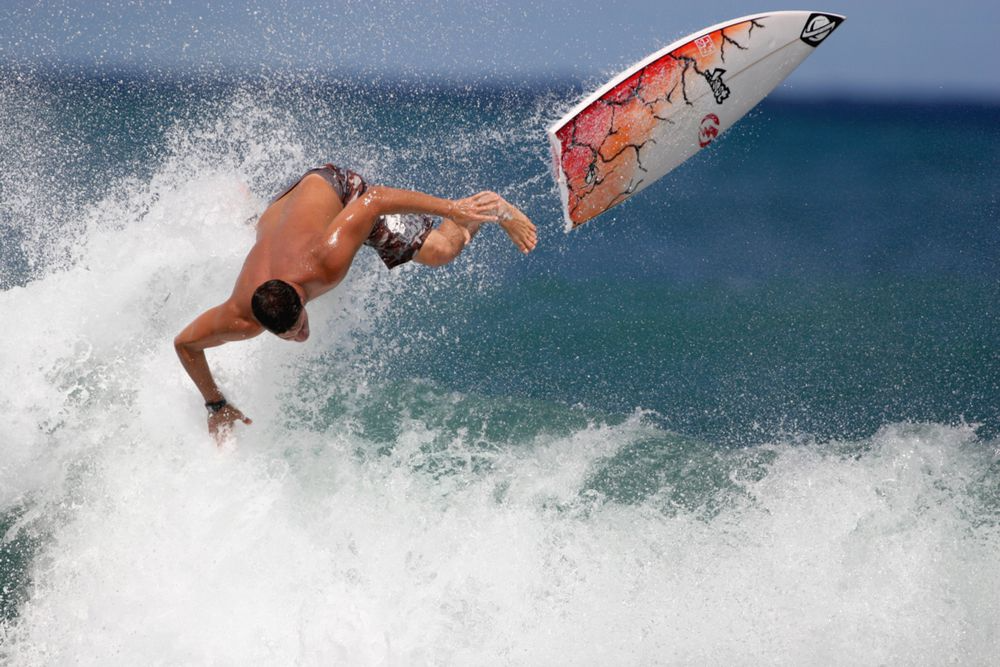
Surfing is one of the most thrilling water sports, but it carries the risk of surfing injuries especially for beginners. Waves, surfboards, and surf conditions can be tricky for some beginners to handle all at once. So, if you’re planning a surf holiday to Morocco, its essential to understand the most common injuries. When you join our surf camp in Taghazout, we help you understand surf etiquette and safety basics to avoid injuries that can ruin your holiday. We want to make sure you go home with happy memories, not pain and frustration!
Cuts
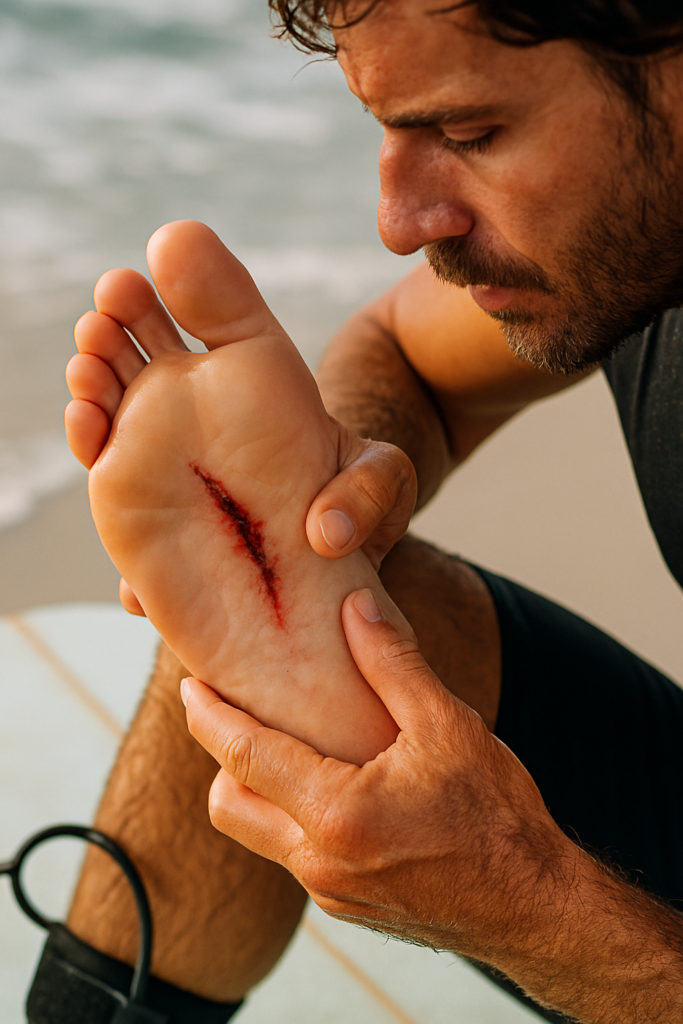
One of the most common surfing injuries is a cut from unintentionally bumping into the fins of your surfboard, jagged coral reefs, rocks, or even another surfer’s board. On most occasions these cuts are not major injury, they can hinder your surfing experience. Taghazout can get busy during season time with several beginners learning to surf. If not careful one can be prone to minor collisions. Here you will also find a few surf spots in Taghazout that have reef and rocks, so as a beginner you must know which spots to avoid. When surfing with us, our coaches will show you which spots to avoid and make sure you know how to handle yourself in the water before you paddle out.
How to Avoid
- For extra protection, put on a rash guard or wetsuit.
- Be mindful of your surroundings at all times; keep an eye out for other surfers.
- If surfing near reef or rocks, reef shoes are a good option to protect your feet.
- To reduce unintentional collisions, learn about surf etiquette and how to handle your surfboard properly.
Sprains and Strains
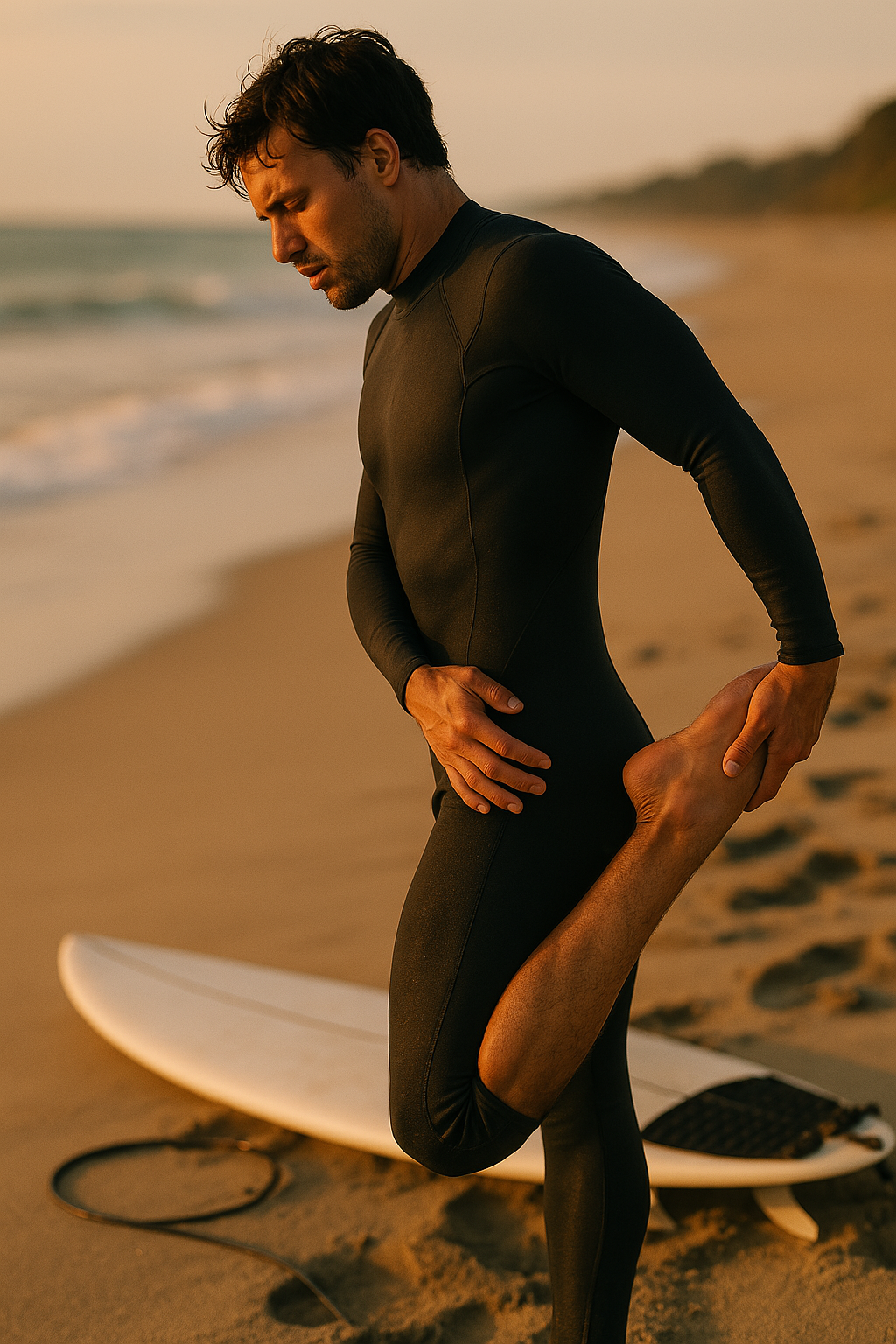
Surfing is a strenuous activity and gives you a full body workout. The effort in paddling and pop-up can take a toll on your shoulder, back, core, and leg muscles. Surfing injuries, like muscle strains or ligament sprains, particularly in the ankles, knees, and shoulders, can result from twisting actions made during pop-ups, wipeouts, or incorrect landings. If you have joined a surf camp in Taghazout, you’re likely going to surf everyday for 5-7 days. After the first couple of days, your body will give you signs of fatigue. It’s important to get rest and sleep well at night to ensure your muscles recover well from surfing activity, especially in Morocco’s warmer weather conditions compared to Europe.
How to Avoid:
- Regular exercise to strengthen your leg and core muscles.
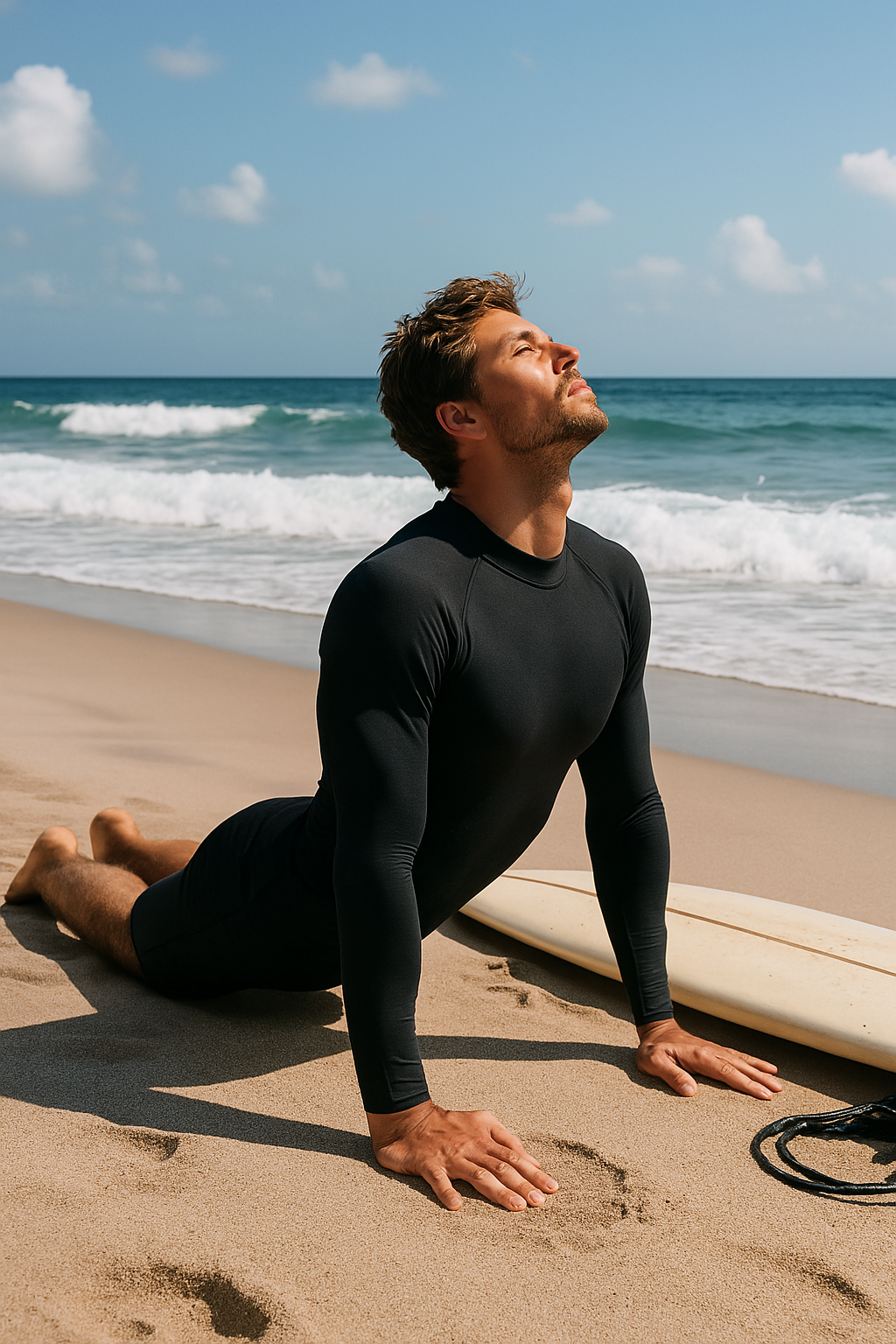
- Stretch and warm up properly before getting in the water.
- To lessen joint stress, use the right paddling and surfing technique.
- Eat well, stay hydrated, and sleep well to give your body time to recover.
Dislocations and Fractures
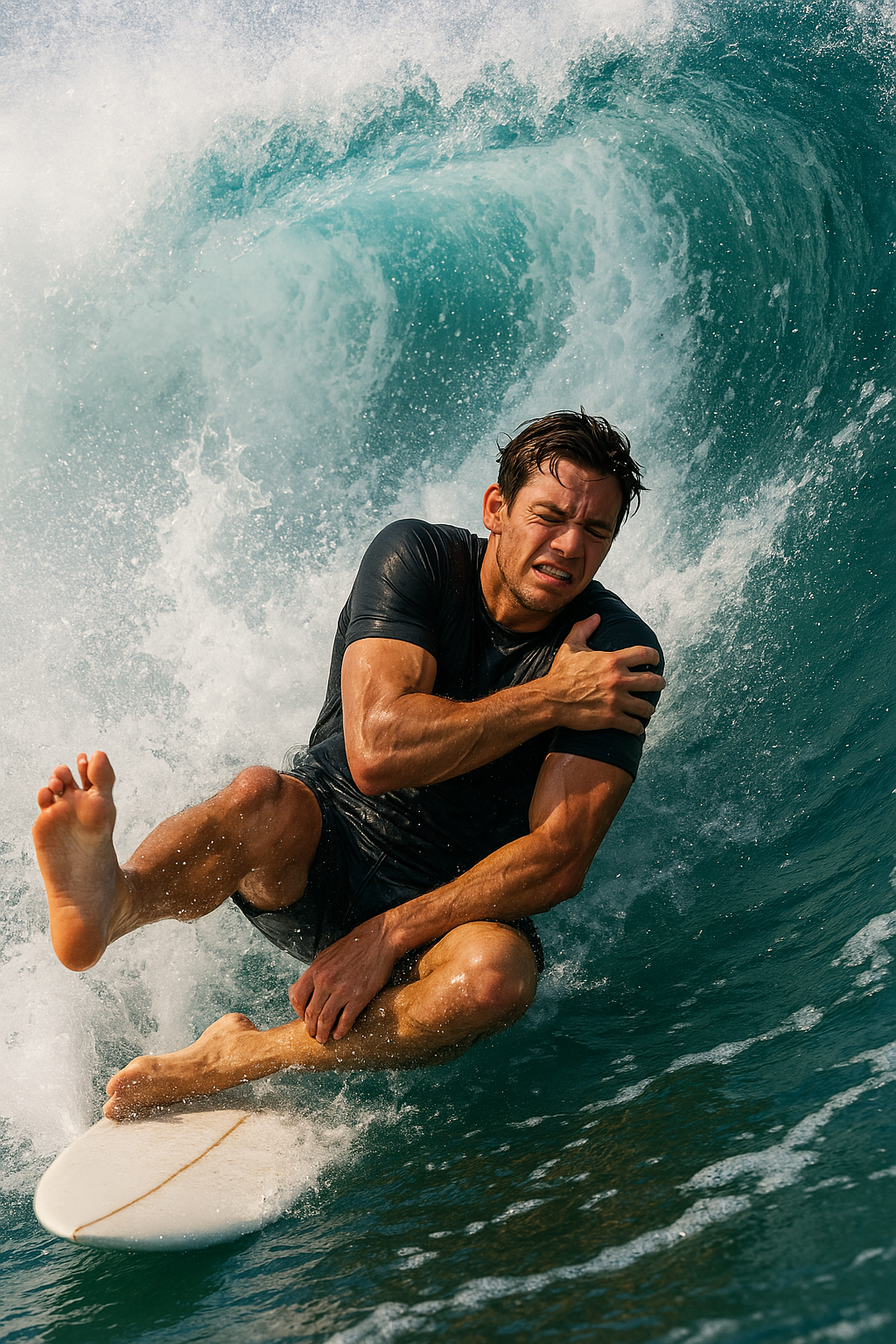
While it’s a lot of fun, surfing can cause bigger injuries, like dislocations and fractures that may arise from severe hits during wipeouts or collisions with your board or the ocean floor. A nose-dive can be a common scenario for beginners and the first instinct is to jump off the board. If you’re not mindful of the way you dive and the water depth, you run the risk of injuring yourself, especially if the landing isn’t good. While many beaches here have a sandy bottom, it can still cause an injury if you don’t have a soft enough landing when jumping off your surfboard.
How to Avoid:
- During wipeouts, always fall flat and shield your head with your arms.
- Be mindful of the water’s depth and avoid diving in headfirst.
- If you’re a beginner level surfer, use a soft-top board.
Sunburn and Dehydration
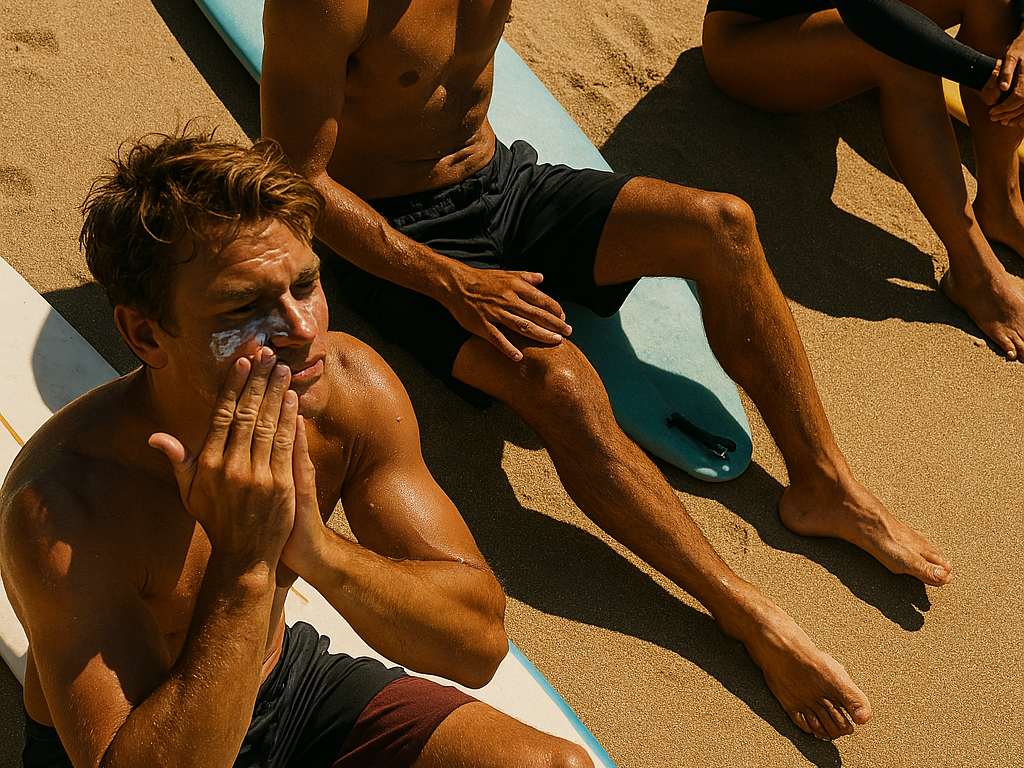
Very common surfing injuries that many over-excited travellers end up with, especially in Morocco, are sunburn and dehydration. You may not feel it much whilst in water, but the sun in Morocco can be harsh. Naturally, these result from prolonged exposure to the sun without proper protection and of course lack of hydration. It’s easy to skip drinking water, as the body doesn’t always give you a signal of being thirsty. While a sun-kissed tan looks amazing when you get back from your holiday, a sunburn is definitely avoidable. After all, a sunburn looks bad and feels worse, as the skin becomes very sensitive to touch.
How To Avoid:
- Put on a high-SPF waterproof sunscreen.
- Drink plenty of water both before and after surfing.
- Put on a surf cap or UV-blocking apparel.
- Keep your wetsuit on unless you’re under a beach-umbrella
Back and Neck Injuries
Surfing puts immense pressure on your back and neck, as maximum time is spent laying on your core during paddling. The upper back, shoulder, lower back get tired. The neck feels stiff from constantly trying to look back and spot the wave you want to try and catch. In addition, improper paddling technique, abrupt, violent landings with wrong board position can cause these minor but annoying surfing injuries.
How To Avoid:
- Warm-up and stretch properly before and after every surf session.
- Strengthen your core and back muscles to support your posture on the surfboard.
- Practice your paddling technique with your surf coach.
- Lightly massage your shoulders, neck, and back to make sure your muscles aren’t sore.
- Get in the hammam – traditional Moroccan sauna steam room to loosen stiff muscles.
With a good understanding of surf etiquette and safety basics, surfing injuries can easily be avoided. Further, you can reduce your chances of injury by working on your fitness and preparing well for your next trip. Surf etiquette is important, so always show consideration for the ocean and other surfers – this can help prevent accidents that can turn a happy moment into a bad memory. It’s something we take seriously at the camp – most of our guests leave injury-free and already planning their next trip.
Yallah let’s go surfing,